
Uncategorized
What Are Research Peptides? A Complete Beginner’s Guide (2026)
Jul
Introduction ,What Are Research Peptides
Research peptides have become an important part of scientific research due to their ability to help scientists study biological processes, cellular functions, and potential therapeutic applications. These short chains of amino acids are widely used in laboratory settings to investigate areas such as tissue repair, metabolism, hormone regulation, and cellular signaling.
At Titan Research Peptides, we are committed to providing high-quality research peptides intended for laboratory and research purposes only. Whether you are new to peptide research or an experienced researcher, understanding what research peptides are and how they are used is essential.
In this guide, you’ll learn what research peptides are, how they work, the different types available, their role in scientific studies, proper storage methods, and important factors to consider when choosing a trusted research peptide supplier.
What Are Research Peptides?
Research peptides are short chains of amino acids that scientists use to study biological processes in laboratory settings. Because peptides act as signaling molecules within the body, researchers investigate how they interact with cells, tissues, hormones, and other biological systems.
Unlike proteins, peptides are much smaller and are made up of fewer amino acids. Their smaller size allows them to participate in many cellular functions, making them valuable tools in scientific research. Researchers study different peptides to better understand cell communication, tissue repair, metabolism, immune responses, and other biological mechanisms.
Research peptides supplied by Titan Research Peptides are intended for laboratory research purposes only and are not marketed for human consumption.
How Do Research Peptides Work?
Research peptides work by interacting with specific receptors, enzymes, or signaling pathways that scientists study in controlled laboratory environments. Each peptide has a unique structure that allows researchers to investigate how it may influence particular biological processes.
Depending on the peptide, research may focus on areas such as cellular signaling, protein synthesis, tissue regeneration, hormone regulation, immune responses, or metabolic activity. These studies help researchers better understand normal biological functions and may contribute to future scientific knowledge.
Because different peptides have different research purposes, selecting the right peptide depends on the objectives of the laboratory study.
Types of Research Peptides
There are many categories of research peptides used in laboratory studies. Each category is investigated for different biological processes and research objectives. Common examples include:
- Growth hormone-releasing peptides (GHRPs)
- Growth hormone-releasing hormone (GHRH) analogs
- Tissue repair research peptides
- Cosmetic and skin research peptides
- Cognitive research peptides
- Metabolic research peptides
- Mitochondrial research peptides
Each peptide should be selected according to the goals of the specific laboratory research project.
Popular Research Peptides
Research laboratories study many different peptides, each with unique properties and research objectives. Some of the most commonly researched peptides include:
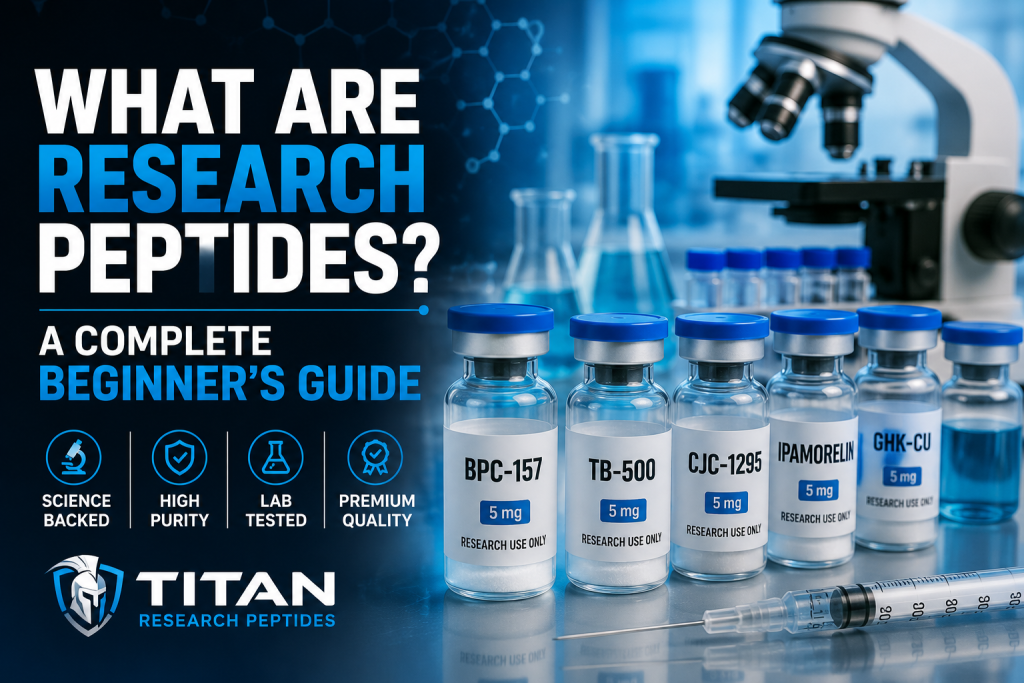
- BPC-157 – Frequently studied in laboratory models involving tissue and tendon biology.
- TB-500 – Commonly researched for its role in cell movement and tissue-related biological processes.
- GHK-Cu – Investigated in skin, hair, and cellular regeneration research.
- CJC-1295 – Used in studies involving growth hormone signaling pathways.
- Ipamorelin – Often researched alongside growth hormone-related peptides.
- Epitalon – Studied for cellular aging and longevity-related research.
- MOTS-c – Investigated in metabolic and mitochondrial research.
- Selank – Commonly researched in neuroscience and behavioral studies.
- Semax – Studied in neurological and cognitive research.
At Titan Research Peptides, researchers can find a broad selection of high-quality peptides manufactured for laboratory research purposes only.
Benefits of Research Peptides in Laboratory Studies
Research peptides have become valuable tools in scientific laboratories because they allow researchers to investigate complex biological mechanisms in controlled environments. Their specific molecular structures make them useful for studying cellular communication, protein interactions, hormone signaling, and metabolic pathways.
Some of the key areas of peptide research include:
- Cellular biology
- Tissue regeneration studies
- Metabolic research
- Neuroscience research
- Hormone signaling
- Skin and cosmetic research
- Mitochondrial function
- Immune system research
These investigations contribute to scientific understanding and future discoveries while remaining within laboratory research settings.
How to Store Research Peptides
Proper storage is essential to maintain peptide quality during laboratory use.
General storage recommendations include:
- Store lyophilized peptides in a cool, dry place.
- Refrigerate or freeze peptides according to the manufacturer’s guidance.
- Protect peptides from excessive heat and direct sunlight.
- Minimize repeated freeze-thaw cycles.
- Use sterile laboratory techniques during reconstitution.
Always follow the storage recommendations provided with each product.
Choosing a Trusted Research Peptide Supplier
Selecting a reputable supplier is important for obtaining high-quality research materials.
When evaluating a peptide supplier, consider:
- Third-party quality testing
- Certificate of Analysis (COA)
- Product purity information
- Reliable customer support
- Secure payment methods
- Fast and discreet shipping
- Clear product documentation
At Titan Research Peptides, quality control and transparency are priorities to support laboratory researchers with dependable products.
Frequently Asked Questions
What are research peptides?
Research peptides are short chains of amino acids used in laboratory research to study biological processes.
Are research peptides the same as proteins?
No. Peptides are generally smaller than proteins and contain fewer amino acids.
How should research peptides be stored?
Storage depends on the peptide, but most should be kept in cool, dry conditions before reconstitution and refrigerated or frozen afterward according to the manufacturer’s instructions.
Where can I buy high-quality research peptides?
Choose suppliers that provide product documentation, quality testing, and clear storag
Conclusion
Research peptides continue to play an important role in advancing scientific knowledge across many areas of biology. Understanding what research peptides are, how they work, and how they are used in laboratory settings helps researchers make informed decisions when selecting products for their studies.
Titan Research Peptides is committed to providing high-quality research peptides supported by quality documentation and intended exclusively for laboratory research purposes. Whether your work focuses on metabolism, neuroscience, tissue biology, or cellular signaling, choosing reliable research materials is an important part of successful scientific investigation.
