
Kisspeptin (10MG)


Price range: £45.00 through £60.00
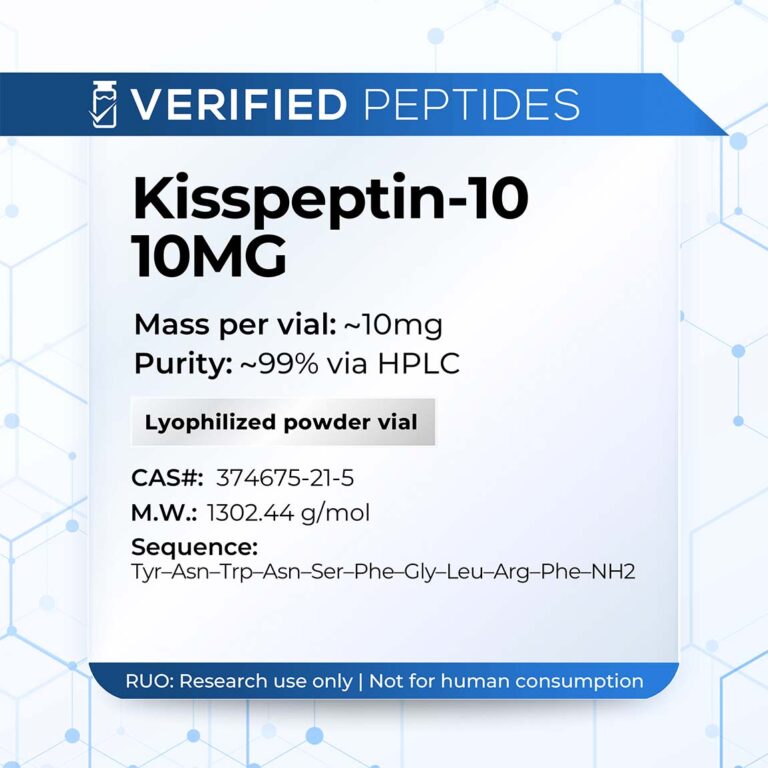
Kisspeptin 10mg is a lyophilized peptide product supplied in a 7 mL (6R) glass vial for laboratory research purposes. The product is supplied as a dry powder and is not reconstituted. According to the provided test report dated May 11, 2026, the sample showed 99.935% reported purity, a measured weight of 12.55 mg, and a passing endotoxin (LPS) result. These results should be interpreted according to the scope of the accompanying laboratory report.
- Product: Kisspeptin (10mg)
- Form: Lyophilized powder
- Container: 7 mL (6R) vial
- Purity: 99.935% reported
- Endotoxin test: Pass
- Condition: Not reconstituted
For laboratory research and analytical applications only. Not intended for human or veterinary use, diagnosis, treatment, or consumption.
Kisspeptin 10mg – Lyophilized Peptide for Laboratory Research
Kisspeptin 10mg is a lyophilized peptide product supplied as a dry powder in a 7 mL (6R) glass vial. It is intended for qualified laboratory research and analytical applications where peptide characteristics, sample quality, and documented testing information are important. The product is supplied in a non-reconstituted form, allowing research professionals to evaluate the material according to their established laboratory procedures and applicable requirements.
At Global Peptides Lab, clear product information helps researchers understand the supplied form, container specifications, and available analytical results before evaluating a laboratory material. The accompanying test information reports a purity result of 99.935% and a passing endotoxin test. These figures provide useful information about the tested sample, subject to the methods, acceptance criteria, and limitations described in the relevant laboratory report.
What Is Kisspeptin?
Kisspeptin is a peptide associated with the regulation of reproductive hormone signaling. It is produced from a precursor protein encoded by the KISS1 gene and is known for its interaction with the KISS1 receptor, also called GPR54. Researchers study this signaling pathway to better understand its role in reproductive biology and the regulation of gonadotropin-releasing hormone (GnRH).
Kisspeptin research has contributed to scientific understanding of the relationship between molecular signaling and the hypothalamic-pituitary-gonadal axis. The pathway is relevant to reproductive endocrinology research, hormone regulation studies, and investigations of peptide-receptor interactions.
It is important to distinguish this scientific background from the properties of an individual commercial sample. General research findings about kisspeptin do not establish the purity, identity, biological activity, or suitability of every product sold under that name. Those characteristics must be evaluated using appropriate analytical documentation and validated laboratory methods.
Product Specifications
The following specifications summarize the product information supplied by Global Peptides Lab.
- Product name: Kisspeptin (10mg)
- Product category: Research peptide
- Primary material description: Kisspeptin peptide
- Physical form: Lyophilized powder
- Container type: Vial
- Vial size: 7 mL (6R)
- Reconstitution status: Not reconstituted
- Reported purity: 99.935%
- Reported sample weight: 12.55 mg
- Endotoxin (LPS) result: Pass
- Test date: May 11, 2026
Important specification note: The listed 10 mg product designation and the reported measured sample weight of 12.55 mg are different values. The measured weight should not automatically be interpreted as the net peptide content. Confirm the laboratory report, the meaning of the reported weight, and the product’s declared net content before relying on these figures for analytical work.
Purity Testing and Laboratory Documentation
Purity is an important consideration when evaluating materials used in peptide research. The supplied test information for Kisspeptin 10mg reports a purity of 99.935%, with testing dated May 11, 2026. This is a reported analytical result for the tested sample, not a universal guarantee covering every vial or future batch.
A meaningful interpretation of a purity result depends on the analytical method used, the sample preparation procedure, the reference standard where applicable, and the laboratory’s reporting criteria. For example, chromatographic purity measurements can indicate the relative proportion of detected components under a particular method, but they do not necessarily establish absolute peptide content, molecular identity, or biological activity.
Researchers evaluating peptide materials should review the complete certificate of analysis (CoA), when available, to understand how the result was obtained. Additional information such as the analytical technique, batch identification, test method, and laboratory details can help establish the relevance and traceability of the reported findings.
Endotoxin Testing
Endotoxins, also known as lipopolysaccharides (LPS), are components associated with the outer membranes of certain Gram-negative bacteria. Endotoxin testing is used in appropriate laboratory and manufacturing contexts to assess endotoxin-related contamination against defined test criteria.
The supplied test information records a Pass result for endotoxins (LPS). This indicates that the result was reported as passing the applicable test criteria, although the exact interpretation depends on the method, specification, and acceptance limit documented by the testing laboratory.
An endotoxin result should not be confused with a sterility test. A passing endotoxin result does not independently prove that a material is sterile, free from all microorganisms, or suitable for injection or other human use. Researchers should consult the relevant documentation and determine whether additional testing is necessary for their particular analytical application.
Lyophilized Powder Form
Lyophilization is a process commonly used to remove water from a prepared material through freezing and controlled drying under reduced pressure. It is used in various scientific and pharmaceutical contexts to produce dry materials that can be evaluated under specified storage and handling conditions.
This product is supplied as lyophilized powder in a 7 mL (6R) vial. It is not reconstituted. The vial size describes the container format and should not be treated as a measurement of the amount of peptide contained within it.
Because product-specific stability data and storage instructions have not been provided here, researchers should follow the manufacturer’s documented handling and storage requirements. Avoid assuming a particular shelf life, storage temperature, or stability period without supporting product documentation.
Research Context and Analytical Considerations
Kisspeptin-related laboratory research can involve peptide characterization, receptor-signaling investigations, and studies of molecular interactions. In these settings, researchers typically need to distinguish between a material’s reported chemical purity and other characteristics that may affect its suitability for a defined experiment.
When evaluating a peptide research material, relevant considerations may include sample identity, analytical purity, peptide content, traceability, potential contaminants, and the availability of appropriate test documentation. The importance of each factor depends on the scientific question and the methods used.
For researchers comparing lyophilized peptide products, consistent documentation can make it easier to review differences in specifications and reported testing. A transparent product listing should state which results have been supplied, identify the applicable test date, and avoid making claims that are not supported by the available evidence.
Global Peptides Lab presents the available product specifications and test information to help qualified researchers understand what is reported for this material. Any conclusions about suitability for a specific experiment should be based on the complete documentation and the requirements of that experiment.
Why Review the Specifications Before Ordering?
Before selecting a research peptide, it is useful to confirm that the product description matches the material and documentation being supplied. This includes checking the product designation, vial format, physical form, reported purity, measured sample weight, and endotoxin test information.
For Kisspeptin 10mg, the available information provides a starting point for this review. The reported purity is 99.935%, and the endotoxin result is listed as Pass. The test date is May 11, 2026. Researchers should confirm that the report corresponds to the relevant product batch and request clarification about any specification that is unclear, particularly the difference between the nominal product designation and the measured sample weight.
Accurate documentation supports informed material evaluation and helps researchers avoid confusing a reported laboratory measurement with a broader guarantee of quality or performance.
Frequently Asked Questions
1. What form is the product supplied in?
The product is supplied as lyophilized powder in a 7 mL (6R) vial. It is not reconstituted.
2. What purity is reported for this product?
The supplied test information reports 99.935% purity, with a test date of May 11, 2026. Refer to the corresponding laboratory report for the analytical method and interpretation.
3. What does the endotoxin test result mean?
The provided endotoxin (LPS) result is listed as Pass. Its precise meaning depends on the testing method and acceptance criteria. It does not, by itself, establish sterility or suitability for human use.
4. Why does the reported weight differ from 10 mg?
The product designation is 10 mg, while the supplied test information reports a measured weight of 12.55 mg. These figures may refer to different measurements. The net peptide content cannot be determined from the reported weight alone, so the accompanying documentation should be checked.
5. Does the 7 mL vial size indicate the peptide quantity?
No. The 7 mL (6R) specification describes the vial format, not the net peptide content.
6. Is the product intended for human use?
No. This listing is intended for qualified laboratory research and analytical applications only. The product is not intended for human or veterinary use, consumption, diagnosis, or treatment.
Global Peptides Lab
Global Peptides Lab aims to provide clear product specifications and available analytical information for research materials. Reviewing the supplied documentation, confirming batch details, and understanding the limitations of each test result are important steps when evaluating a laboratory peptide.
For this product, the available information includes lyophilized powder in a 7 mL (6R) vial, a reported purity of 99.935%, a measured sample weight of 12.55 mg, and a passing endotoxin test dated May 11, 2026. Consult the relevant laboratory documentation for complete details and clarification of any specification.
Research-use notice: For laboratory research and analytical use only. Not for human or veterinary consumption, injection, diagnosis, treatment, or prevention of disease. Follow applicable laws and institutional laboratory procedures.
| Quantity | 1-4, 10-24, 20+, 5-9 |
|---|
Be the first to review “Kisspeptin (10MG)”
Related products

Peptides

Peptides

Peptides

Peptides

Peptides


Peptides

Peptides
Reviews
There are no reviews yet.