

Blend: KPV GHK-Cu BPC-157 TB-500 (KLOW)
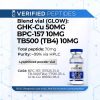

Price range: £101.00 through £135.00
KLOW Peptide Blend – KPV, GHK-Cu, BPC-157 & TB-500
KLOW Peptide Blend is a lyophilized powder formulation featuring four peptide-related components: KPV, GHK-Cu, BPC-157, and TB-500 (TB4). Supplied in a 7 mL (6R) vial, this product is not reconstituted and is intended for laboratory research purposes only.
Product specifications:
- Components: KPV, GHK-Cu, BPC-157 and TB-500 (TB4)
- Form: Lyophilized powder
- Vial size: 7 mL (6R)
- Status: Not reconstituted
- Reported purity: Approximately 99%
- Endotoxin (LPS) test: Pass
- Batch number: KL06260480D
- Date tested: June 8, 2026
Refer to the available batch-specific test information for reported component quantities, purity and endotoxin results.
KLOW Peptide Blend – KPV, GHK-Cu, BPC-157 and TB-500
Product Overview
The KLOW Peptide Blend is a multi-component research formulation featuring four named components: KPV, GHK-Cu, BPC-157 and TB-500, also identified in the supplied product information as TB4. It is presented as a lyophilized powder in a 7 mL (6R) glass vial and is supplied in a non-reconstituted form.
At Global Peptides Lab, clear product specifications and transparent batch information help researchers identify the material they are evaluating. This listing provides an overview of the blend’s stated composition, physical presentation and available quality-control results.
The product combines components that are discussed separately in scientific literature. However, findings relating to individual compounds should not be interpreted as proof that this specific combination has established performance, safety or effectiveness. Research on a component does not automatically validate a mixture containing that component.
What Is Included in This Peptide Blend?
The formulation lists four components. Each has its own identity in biochemical and preclinical research, and each should be evaluated using appropriate scientific evidence rather than assumptions based solely on its inclusion in a blend.
1. KPV
KPV is a short peptide sequence commonly discussed in experimental research involving inflammatory signaling and biological processes. Scientific interest in KPV does not, by itself, establish a clinically demonstrated benefit for a particular condition or confirm the performance of this combined formulation.
Researchers reviewing KPV-related literature should distinguish between laboratory observations, animal studies and controlled human clinical evidence.
2. GHK-Cu
GHK-Cu is a copper-binding peptide complex investigated in several areas of biological research. It is frequently discussed in literature concerning cellular processes, skin biology and tissue-related research.
The presence of GHK-Cu in this formulation identifies one of its listed components; it should not be taken as a guarantee of a particular biological effect. Evidence for an ingredient studied independently may not apply to a multi-component preparation.
3. BPC-157
BPC-157 is an experimental peptide that has been investigated primarily in preclinical research. Published findings involving experimental models do not establish that it is safe or effective for human treatment.
Researchers should review the quality, methodology and limitations of available studies before drawing conclusions. The inclusion of BPC-157 in this blend is a compositional detail, not a claim of therapeutic efficacy.
4. TB-500 (TB4)
TB-500 is the name used in this product’s supplied specifications, with TB4 given in parentheses. Researchers should verify the precise molecular identity and analytical characterization of the material when evaluating it for scientific work, because product naming conventions do not independently establish molecular equivalence.
Research involving thymosin beta-4 or related peptide materials should not automatically be treated as evidence about every product marketed under the TB-500 name.
Product Specifications
The following information is based on the product details provided for this listing.
- Product name: KLOW Peptide Blend
- Listed components: KPV, GHK-Cu, BPC-157 and TB-500 (TB4)
- Physical form: Lyophilized powder
- Vial size: 7 mL (6R)
- Reconstitution status: Not reconstituted
- Reported purity: Approximately 99%
- Endotoxin testing: LPS test reported as Pass
- Batch number: KL06260480D
- Test date: June 8, 2026
The 7 mL (6R) specification describes the stated vial format. It should not be confused with the net mass of powder, the total quantity of active components or a recommended preparation volume.
Reported Batch Test Results
The supplied test information reports the following component quantities and quality-control findings for the listed batch.
| Test parameter | Reported result |
|---|---|
| KPV | 11.48 mg |
| BPC-157 | 12.89 mg |
| TB-500 (TB4) | 12.47 mg |
| GHK-Cu | 57.52 mg |
| Purity | Approximately 99% |
| Endotoxins (LPS) | Pass |
| Batch number | KL06260480D |
| Date tested | June 8, 2026 |
These values are reproduced from the supplied product information. They should be checked against the original analytical report before being relied upon for scientific or purchasing decisions.
A reported purity result and an endotoxin result represent different types of quality information. Purity describes the result of a specified analytical assessment, while an endotoxin test evaluates a particular class of bacterial contaminants according to the method and acceptance criteria used. Neither result alone establishes sterility, complete contaminant absence, clinical suitability or overall safety.
For this reason, researchers should review the underlying report for the testing methods, sample identity, acceptance criteria and laboratory details. The term “Pass” should be interpreted according to the documented test method and its stated limits.
Lyophilized Powder and Vial Format
Lyophilization is a freeze-drying process used to remove water from a material under controlled conditions. The product is listed as a lyophilized powder and is supplied without reconstitution.
The physical form and container size are useful identification details when comparing research materials. Nevertheless, a vial’s stated capacity does not establish its net contents, and the appearance of a powder cannot verify identity or purity.
No preparation instructions, storage conditions or stability period should be inferred without product-specific documentation. Follow applicable laboratory procedures and consult the relevant technical documentation for handling requirements.
Why Review Batch-Specific Documentation?
Batch identification helps connect a product listing with the particular material and testing information associated with it. The batch number supplied for this formulation is KL06260480D, with a reported test date of June 8, 2026.
When reviewing documentation, check that the batch number matches the vial and the corresponding analytical report. Where available, examine the methods used for identity, purity, component quantification and endotoxin testing. A report’s scope matters: a test for one characteristic does not confirm every other quality attribute.
At Global Peptides Lab, product information should be read alongside available supporting documentation. If a specification is not covered by the supplied report, it should not be assumed to have been independently verified.
Frequently Asked Questions
What components are listed in this formulation?
The product information lists KPV, GHK-Cu, BPC-157 and TB-500 (TB4). Refer to the batch-specific analytical documentation for the reported quantities and any additional characterization.
What form does the product come in?
It is described as a lyophilized powder supplied in a 7 mL (6R) vial. The product is listed as not reconstituted.
What purity is reported?
The supplied product information reports approximately 99% purity. The meaning and scope of this result depend on the analytical method and documentation used.
Has the product been tested for endotoxins?
The supplied results state that the endotoxin (LPS) test passed. Consult the original report for the testing method and acceptance limits. This result should not be interpreted as proof of sterility.
Does the test result establish that the blend is safe for human use?
No. Purity and endotoxin results do not establish clinical safety, effectiveness or suitability for human administration. The listed compounds and their combination should not be assumed to be approved treatments.
Is this product supplied in liquid form?
No. It is listed as a lyophilized powder and is supplied without reconstitution. The vial size describes the container format, not a preparation or dosing instruction.
Important Research Notice
This product description is intended to communicate product identity, supplied specifications and reported quality-control information. It does not provide medical advice or establish a therapeutic use for the listed compounds.
Research status, regulatory classification and permitted use can vary by jurisdiction. Verify applicable requirements and the documentation accompanying the specific batch before purchasing or handling research materials.
Global Peptides Lab encourages careful review of product specifications and analytical records so that researchers can make informed, evidence-based assessments. Claims about identity, purity, composition and quality should be supported by relevant documentation rather than inferred from a product name or ingredient list.
| Quantity | 1-4, 10-24, 20+, 5-9 |
|---|
Be the first to review “Blend: KPV GHK-Cu BPC-157 TB-500 (KLOW)”
Related products

Peptides

Peptides

Peptides

Peptides

Peptides
Peptides

Peptides
Reviews
There are no reviews yet.